


Like many before me, I believe my Bitcoin journey started well before Bitcoin even existed. My...
The Problem's Too Big. Or is it?
I’ve spent most of my life in hospitality, building and running hotels, solving the daily puzzles of guests, staff, kitchens, and balance sheets. But the biggest problem I’ve ever confronted isn’t one that happens inside Congham Hall. It’s the one that affects every pound I earn, every investment I make, and the future I’m trying to secure for my family. Most people sense something is deeply wrong with the financial world - currency debasement, endless inflation, and the treadmill of trying to outrun it. They nod along and then say, “Yeah, but Bitcoin can’t solve it. The problem’s too big.”
I used to think that too, but now I know the solution is simple. We just step out of one system into another, and the monetary problems start to dissolve. It seems almost too straightforward to be true, which is why adoption is still early. But once you see it, you can’t unsee it. This is my story - from running hotels to setting snail racing world records, to stacking sats and thinking in Bitcoin.
My Life in Hospitality: From Trainee to Owner of Congham Hall
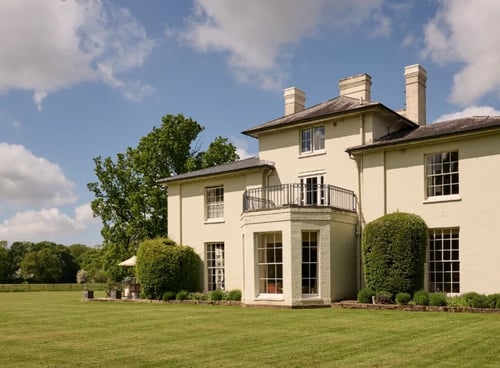
Congham Hall is hotel number thirteen in my career, and it’s the one I’ve held onto the longest. I’ve been a hotelier my entire working life. It started back in 1982 at a famous hotel in the New Forest called Chewton Glen. I was their first-ever trainee manager. I worked my way up, then moved to Le Manoir aux Quat’ Saisons to try taming a mad French chef for a few years. Those were formative times.
In the early 1990s, I partnered with a business colleague. Hotels qualified for tax relief then, so we raised capital and bought our first property. Over about fifteen years we built two groups: Luxury Family Hotels (which still exists) and Alias Hotels, town-centre properties. We sold both groups in 2006 - fortuitous perfect timing, just before the Global Financial Crisis. We exited the UK hotel business, developed a resort in Portugal on the western Algarve right on the beach, opened it in 2010, and then I found myself back in Britain, too young to retire.
Congham Hall came onto my radar in 2011. It had been owned by the company we’d sold one of our groups to, which later went bust. We pulled it out of administration. It’s been my longest single project - my “swan song,” as I call it. I’m back to basics here, playing “Basil” on the floor instead of wrestling with banks and shareholders across a portfolio of ten hotels.
Congham Hall is a classic Georgian country house built for a wealthy King’s Lynn merchant, sitting on the edge of the Sandringham estate in rural Norfolk. At its heart it’s elegant and traditional, but to run a year-round business in the provinces today you need more. We sit in about 50 acres. We have a serious spa that drives business even on quiet weekdays. We’ve added orchard cabins - beautiful spaces overlooking the trees, with tin baths outside for star-bathing soaks. These aren’t gimmicks; they’re thoughtful extensions of the experience that feel authentic rather than fad driven. People come for spa days, treatments, stays, dining, or just to escape.

When we bought the place, the village pub on the edge of our grounds came up for sale cheaply. I bought it defensively at first - I didn’t want a celebrity chef setting up in direct competition on our doorstep. Then our sous chef wanted to run it, so we reopened it as a proper local. It’s thriving. Not every pub in Britain is dying; good ones with the right approach survive.
Running a hotel profitably in the UK is not rocket science, but it’s brutally hard to get right. We employ around 100 staff between the hall and the pub - almost all local, which is rare and something I feel blessed by. Norfolk has given me the chance to have an authentic team that embodies English hospitality. The trick isn’t making a fortune running hotels; it’s not losing one, while owning appreciating real estate. Though as I’ve learned through Bitcoin, that “appreciation” is often just fiat numbers inflating.
The Snail Racing World Championships
One of the quirkiest parts of Congham Hall’s story is something I inherited and refused to let die: the Snail Racing World Championships!
Snail racing started in France. A local villager, Tom Elwes (buried in Congham churchyard with a little snail on his gravestone), saw it there, brought the idea back in the 1960s, and it’s been held in the grounds of Congham Hall ever since. It became part of the village fête. When COVID stopped the fête, the organizers decided not to restart it. I stepped in: “Blow the rest of the fête - snail racing is a British tradition. We can’t let it die.”
Another businessman and I took it on. This year will be the 56th world championships. I’m proud that my hotel has hosted it from the beginning. Archie the snail holds the Guinness World Record at two minutes for the 13.5 inch course (we never went decimal). I’m officially the Snail Master.
Competitors come from around the world - even French champions. Some bring their own snails; most rent from our stable for a pound an entry. They race on a circular table: first to the outer circle wins. The press loves it. I’ve been interviewed in Australia, featured in the New York Times. We get 200 snails competing. It’s eccentric British heritage - just like worm charming, bog snorkelling, cheese rolling. I couldn’t let this one fade. And if I got a fraction of this publicity for the core hotel business, I’d be a very wealthy man. But that’s life.
My Bitcoin Journey: From Skeptic to Believer
For years I heard about Bitcoin the way most people did - as something drug dealers and criminals used. I filed it under “not for me.” Then, about eighteen months ago, I read The Price of Tomorrow by Jeff Booth. It’s not primarily a Bitcoin book, but touched on it at the end. It made me think seriously about deflationary worlds and how our obsession with outrunning inflation might be the root of many problems. That planted the seed.
Six months later I watched “What’s the Problem?” - that was the lightbulb moment. It articulated the monetary issues I’d been sensing. Around the same time, I’d done a financial planning course - lifetime cashflow planning, assets, liabilities, aspirations. I wasn’t an IFA, but I’d applied it to myself. I understand how hard it is to stay ahead of real inflation and currency debasement.
I became addicted to finance podcasts, including one aimed at advisers that mentioned “the Bitcoin IFA,” Dan Parkinson. I reached out - bless him, he gave me half an hour. He introduced me to Rich at The Bitcoin Adviser. I signed up as a client and have been deep in the rabbit hole ever since. I bought my first significant stack on 6th October last year - at the all-time high. Less than nine months in and I’m still here, and more convicted than ever.
I’ve read Saifedean Ammous, Lyn Alden, and many more. I went from knowing only that there are 21 million coins to understanding difficulty adjustment, hash rate, cold storage, and self-sovereignty. I chose a multi-sig setup with The Bitcoin Adviser for practical peace of mind - someone I can message day or night, like a Bitcoin-savvy financial adviser.
The Bitcoin Power Law: My Anchor in Volatility
The single biggest source of conviction for me has been the Power Law. Bitcoin isn’t just an asset; it’s a protocol governed by multiple power laws - addresses, hash rate, network growth. Giovanni Santostasi discovered how closely it follows this long-term trend.
Why is it such a good tool? It cuts through the noise. When I bought at the all-time high, the trend price was around there. Now the trend has moved higher according to the power law, but because of the recent correction we’re buying at a significant discount. I think in sats now. My hard currency is sats; pounds are the volatile one. When I go to Turkey and deal with their inflation, I’m constantly calculating exchange rates. I do the same with Bitcoin: more sats per pound is a good deal.
The power law has held with 96% accuracy for 17 years, statistically almost perfect. It predicts massive long-term growth - Michael Saylor talks about it as a high-growth “asset” (though we know it’s money) with declining volatility over time. It gives guardrails: trend price, rainbow charts, percentiles. I know, for example, that at some point in the not-too-distant future it won’t drop below $100k again according to the power law. That framework lets me DCA sensibly, zone out of short-term volatility, and assess whether I’m buying at a discount to fair value.
I needed skin in the game to study properly. Once I had it, the research accelerated. The power law turned abstract knowledge into a practical decision-making tool.
The Future of Bitcoin: What It Means for My Family and Business
Bitcoin is money. It’s just not yet the money everyone uses. But I can treat it as my money now. Fix the money, fix the world. A deflationary, hard money system aligns incentives with productivity and innovation rather than endless debt and consumption. We’ve never truly had a free market because we’ve never had sound money at scale. Bitcoin can change that.
For my family, this has been transformative. My children are in their late 20s and early 30s - trying to get on the housing ladder, build lives in a world of currency debasement. Through the fiat lens, thirty years on from when I was their age, it looks scary. Bitcoin has made me far more relaxed about their futures. I’ve redone my lifetime cashflow planning using power-law projections for Bitcoin. It changes the picture dramatically. I can be more present and spend appropriately today without the old fear that my savings are melting.
For the business, the implications are huge. Cash reserves sitting in depreciating fiat? Illogical once you understand. Accepting Bitcoin as payment, eventually holding some in treasury - these are no-brainers for long-term resilience. I’m not there yet with stakeholders, but I’m taking baby steps. First, accept it and convert if needed. Show it works. Build conviction internally. I want guests to ask, “Do you accept Bitcoin?" Pressure from demand helps.
I’m still transitioning personally - haven’t sold my buy-to-lets yet, though I know I should. Old habits die hard. But the direction is clear. Bitcoin makes you fabulously wealthy but keeps you in pain 90% of the time with volatility. I haven’t had my "face ripped off" yet in a full cycle. I’m nervously excited.
Most people know there’s a problem. They watch “What’s the Problem?” and agree. Then they say the problem is too big for such a simple solution. But it is that simple: step out of the inflationary system into Bitcoin. The internet took decades to mainstream. Bitcoin is 17 years in - early, but accelerating. We need to be patient and keep educating.
Why The Bitcoin Adviser Is My Responsible Partner
I chose collaborative custody and professional guidance because self-sovereignty is important, but so is practicality - especially with family and a business. If something happens to me, my wife has support. The multi-sig setup, accessibility, education, and ongoing partnership - it’s the equivalent of a trusted financial adviser but for Bitcoin. They’ve helped me move fast down the rabbit hole without getting lost in unnecessary complexities early on.
Rich and the team have given me confidence and security. In a world still learning to trust this new system, having a responsible, knowledgeable partner is invaluable. They’re not custodians; they’re educators and long-term allies as we integrate Bitcoin into life and business.
I’m only nine months in, but Bitcoin has already changed how I think, plan, and view the world. Congham Hall continues as a beautiful country house hotel with its spa, cabins, local staff, and yes - snail racing on the 18th of July this year. Come visit. Try to beat Archie's record. And if you feel like asking whether we take Bitcoin… well, that might just help tip the scales.
The problem is big. The solution is simple. We just have to take the step.
Nicholas is a client of The Bitcoin Adviser. Watch the interview he did with the Bitcoin Collective that inspired this article.